
Oven baked hamburgers are the perfect solution when you want to skip the grill and the grease-splattered stovetop. These burgers are the easiest way to get juicy, tender patties on the table without having to stand over a hot pan. With a simple wire-rack setup, the fat drains away, leaving you with a perfect, stress-free weeknight meal.
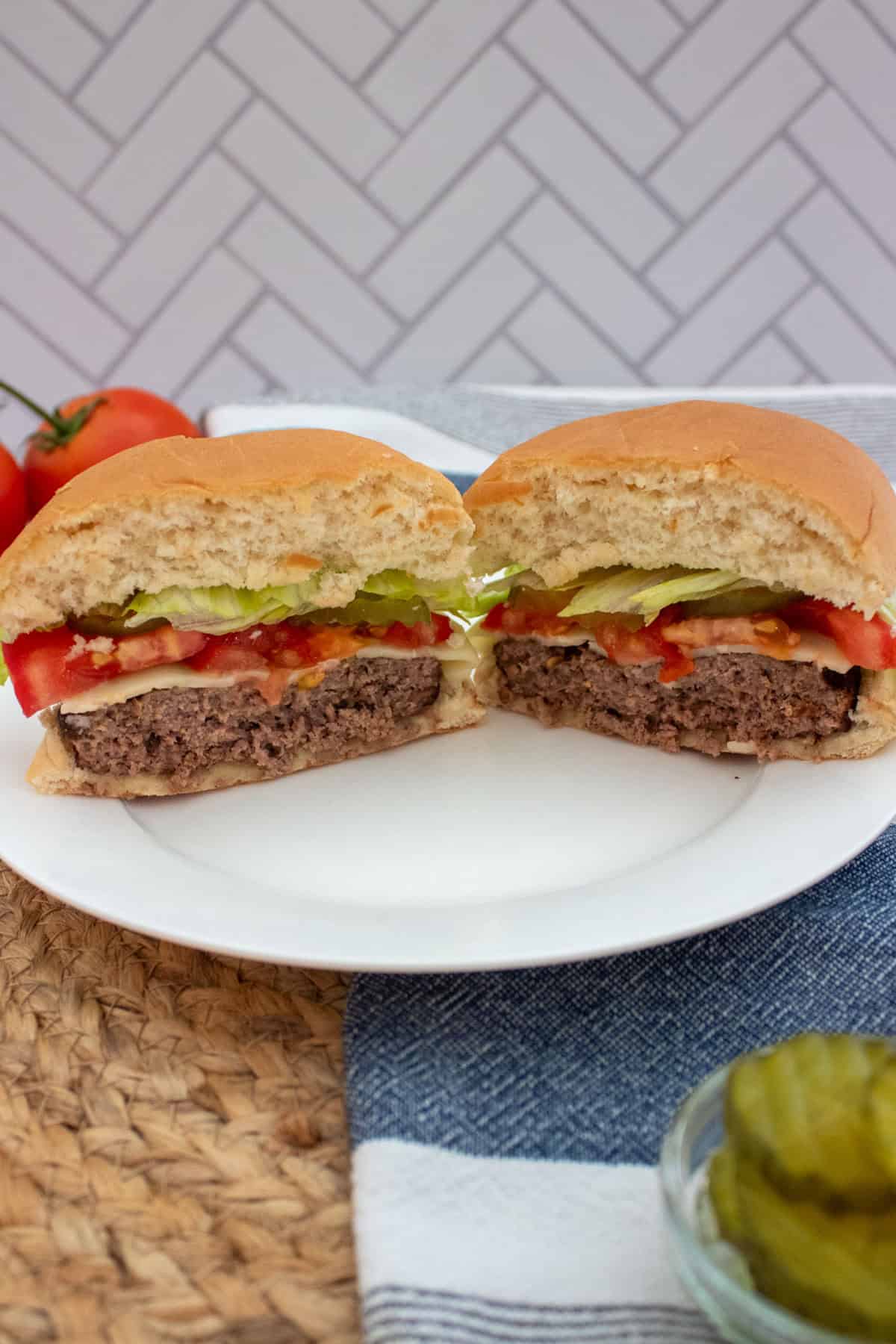
Why You'll Love These Oven Baked Burgers:
- Mess-Free Cooking: Baking burgers on a wire rack over a foil-lined sheet pan keeps your stovetop clean and allows excess fat to drain away, resulting in juicy patties without the grease splatter.
- Hands-Off Convenience: This method eliminates the need to stand over a hot pan or grill, allowing you to use the oven time to prepare toppings, toast buns, or manage the rest of your dinner.
- Versatile Preparation: You can easily adapt this recipe for fresh or frozen patties, and the oven-baked results are consistent, making it a great staple for busy weeknights.
Why oven-baked hamburgers work so well
The key is the pan setup. A baking sheet lined with aluminum foil catches the drippings, and a wire rack lifts the burgers up so the fat can drain away as they cook and lets air circulate. That gives you a burger that is still juicy, but not sitting in grease the whole time.
This method also helps the patties stay together. Because you are not flipping them back and forth on a grill or skillet, the ground beef holds its shape more easily.
If you already like simple oven dinners, this has the same low-stress feel as oven-baked chicken breast. You get steady heat, easy timing, and plenty of room to work on the rest of the meal.
Let's Get Started! Here's What You'll Need:
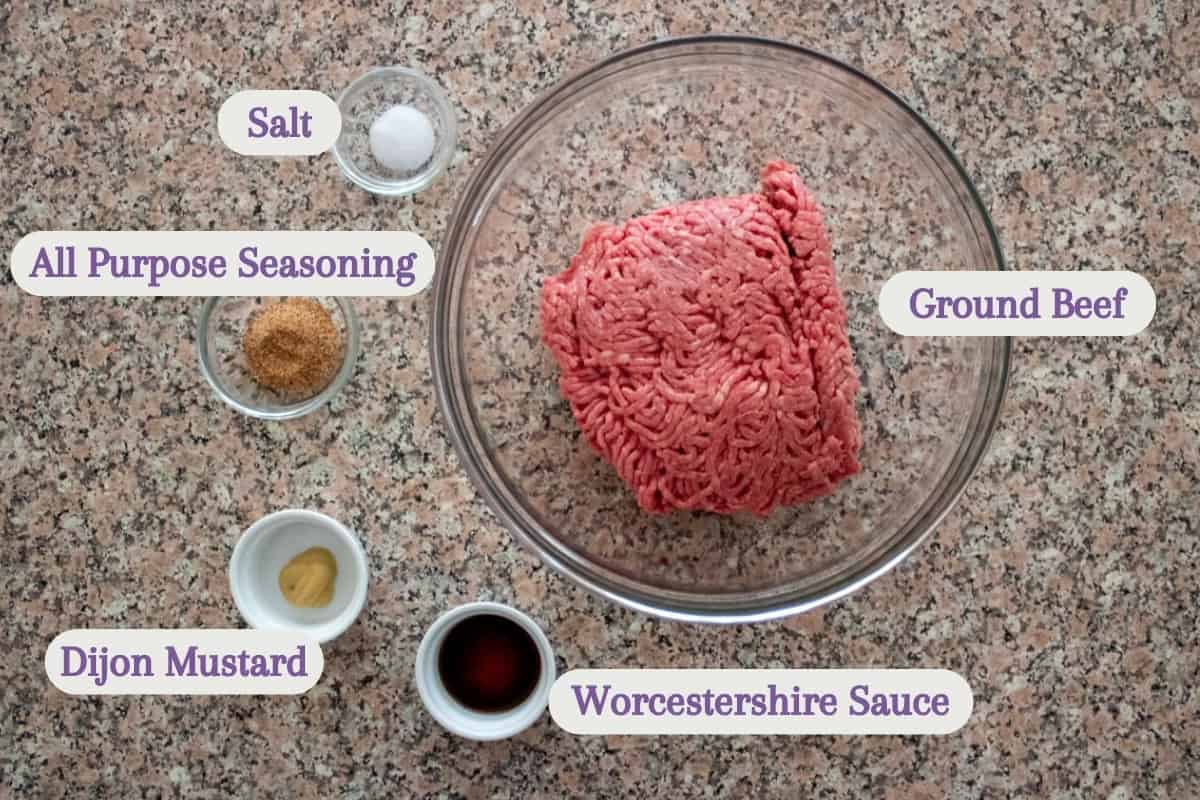
Ingredients:
Ground Beef- I use 80/20 because, but since we're not cooking over a flame you can be flexible- just keep in mind the more fat, the more shrinkage when cooking. On the other end, very lean beef won't be quite as flavorful. Store-bought burger patties are fine if you need a shortcut. If they are plain, season the tops before baking. A light brush of oil can help the seasoning stick better. Still, mixing the seasoning into the meat gives you better flavor from edge to edge.
All Purpose Seasoning- I use a homemade blend of salt and pepper, garlic powder, onion powder, and paprika, but your favorite is fine.
Salt- My all purpose seasoning isn't heavy on salt, if yours is you can omit this.
Dijon Mutard- For a little tang- you can swap yellow mustard if that's what you have on hand.
Worcestershire sauce- brings that deep, savory note burgers need.
Equipment:
You will need a few basic kitchen tools:
- A rimmed baking sheet
- Aluminum foil (optional)
- A wire rack that fits inside the pan
If you want easy cleanup, fold the edges of the aluminum foil up slightly around the rim of the baking sheet. That helps catch the grease before it spreads across the pan.
How to Make Juicy Burgers in the Oven- Step 1: Mix & Shape
The trick here is simple. Mix the meat only until everything looks evenly combined. Once the seasoning disappears into the beef, stop.
Overworking ground beef can make burgers dense. You want the meat to hold together, not feel packed tight.
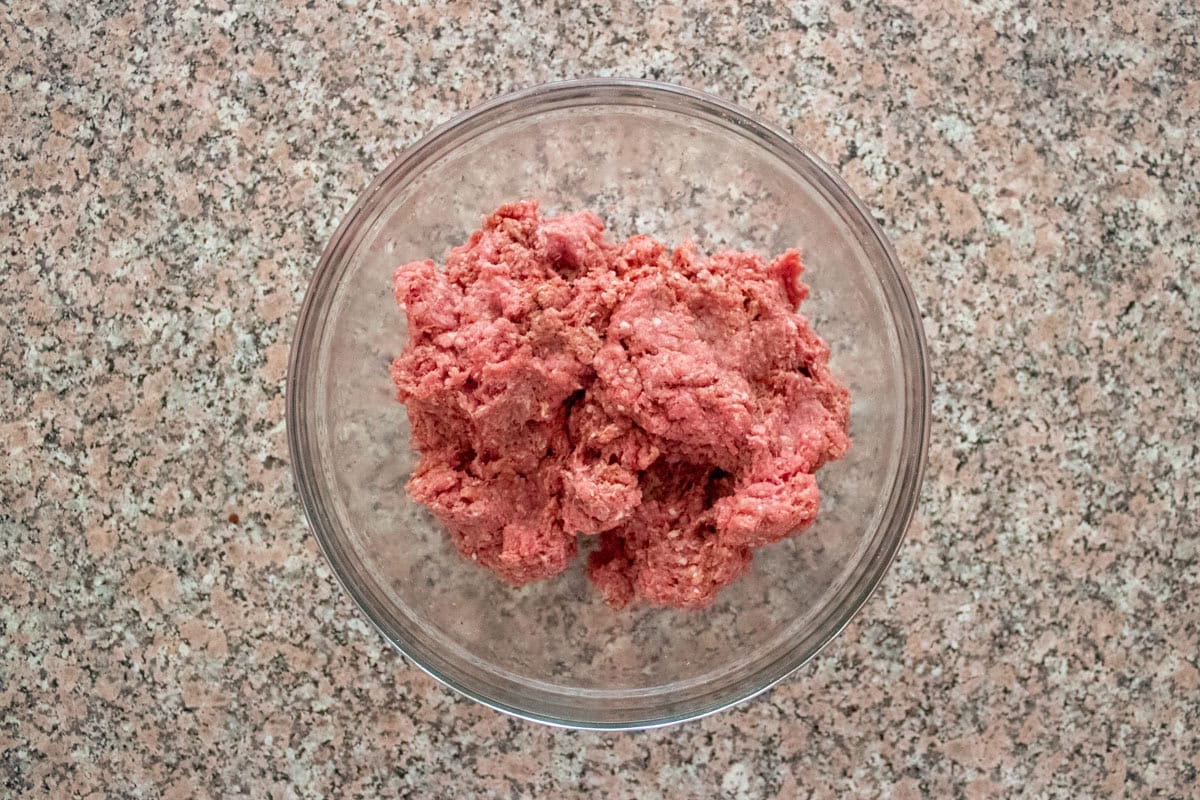
A 20-ounce package of beef divides neatly into four patties, so each one ends up around 5 ounces. That is a little larger than a quarter-pound burger and close to a third-pound size, which feels generous without being too thick.
Follow this shape-and-bake order:
- Put the ground beef in a bowl and add the seasoning, salt, Dijon, and Worcestershire sauce.
- Mix lightly with your hands until the seasonings are spread through the meat.
- Divide the beef into four even portions and roll each one into a loose ball.
- Press each ball into burger patties that are a little wider than your palm.
Don't worry about making perfect circles. These are homemade burgers, not factory-made patties. If the edges crack or start to separate, press them back together and keep going.
Once the burger patties are formed, use the thumbprint trick by pressing two fingers gently into the center of each one. That small dip helps the burgers stay flatter as they cook instead of puffing up in the middle. As a result, they shrink less and fit the bun better.
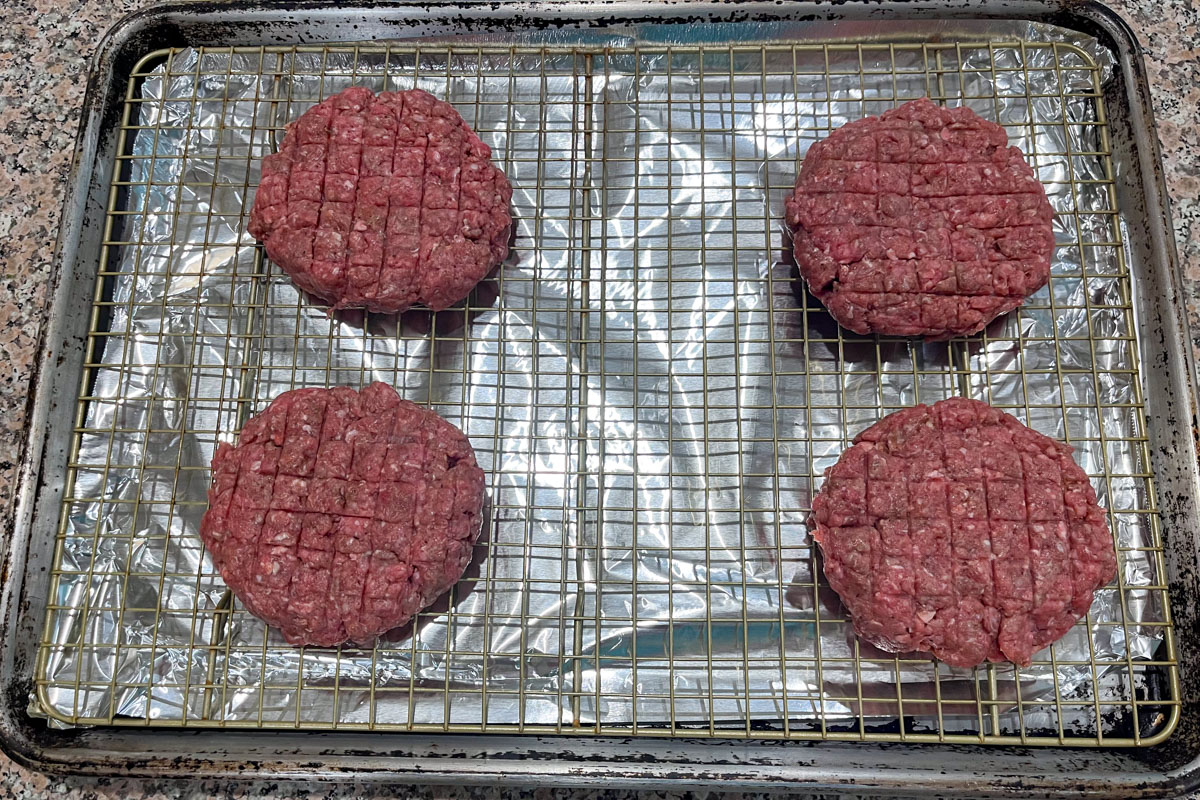
Step 2: Bake- times for fresh, frozen, and air fryer burgers
Oven timing for fresh burgers
First, preheat oven to 400 F. Once the oven is ready, fresh patties generally need 15 to 20 minutes to cook through. Aiming for 18 minutes is the sweet spot for most home ovens to ensure the meat is cooked while remaining juicy.
If you are a fan of cheeseburgers, add your cheese slices during the final minute or two of baking so they melt perfectly.
For a quick reference, use this table to manage your cooking time on a sheet tray:
| Method | Temperature | Fresh patties | Frozen hamburger patties | Notes |
|---|---|---|---|---|
| Conventional oven | 400 F | 15 to 20 minutes | 20 to 25 minutes | Use a sheet tray |
| Air fryer | 375 F | About 12 minutes | 16 to 17 minutes | Check early; models vary |
| Convection oven | 375 F | About 12 minutes | 16 to 17 minutes | Similar timing to air fryer |
Frozen hamburger patties typically require about 5 extra minutes of cooking time.
Air fryer and convection conversions
Air fryers circulate hot air rapidly, so the standard rule is to lower the temperature by 25 degrees and cut the cooking time by about one-third. That takes you from 400 F for roughly 18 minutes in a standard oven to 375 F for about 12 minutes in an air fryer.
A convection oven works the same way because it also circulates hot air. If your oven has a convection setting, use the shorter time and lower temperature there as well.
Checking for safety and doneness
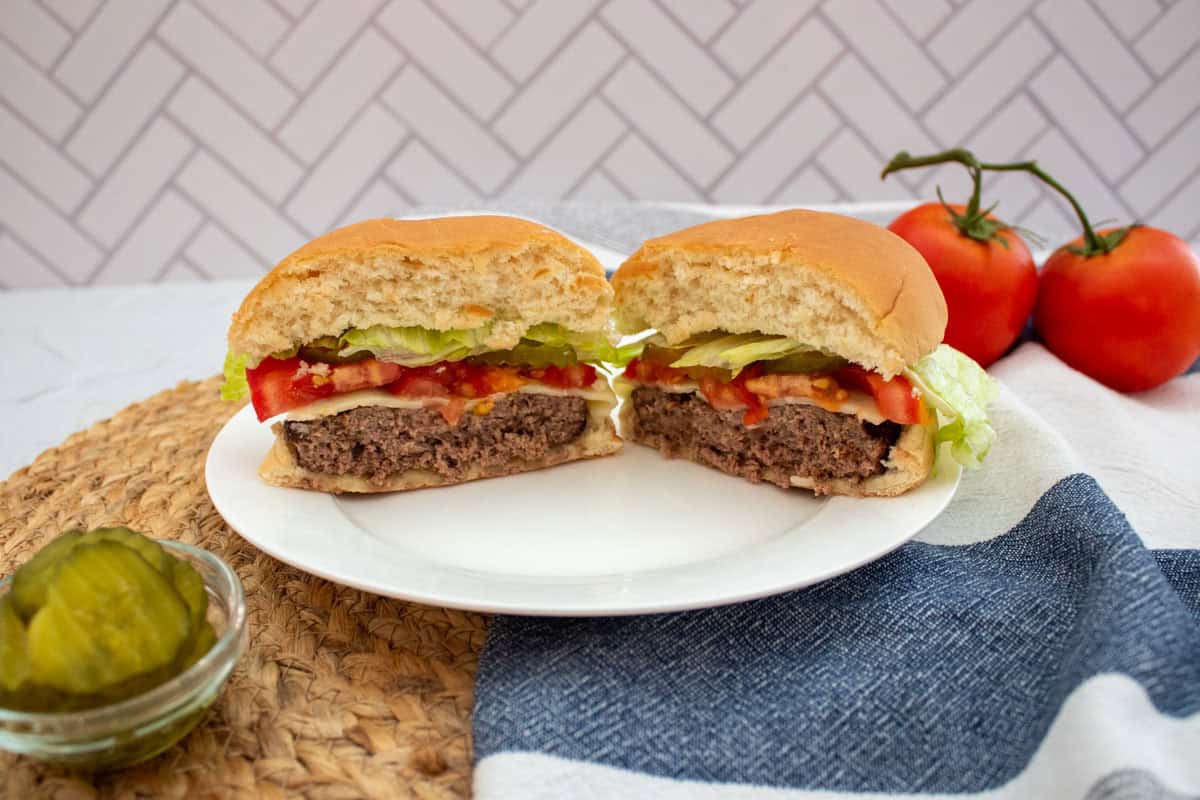
To ensure your dinner is safe and perfectly cooked, I recommend using a meat thermometer to check the internal temperature of the thickest part of the patty. You want the internal temperature to reach 160 degrees, which is the standard for food safety while still giving you a juicy burger.
Because every appliance functions differently, using a thermometer is the most reliable way to check doneness, since variation in oven performance can affect how quickly the internal temperature rises.
How to freeze homemade burger patties for later
This recipe gets even better when you make extra. Once you have shaped your burger patties, stack them with small pieces of parchment paper between each one so they do not freeze together.
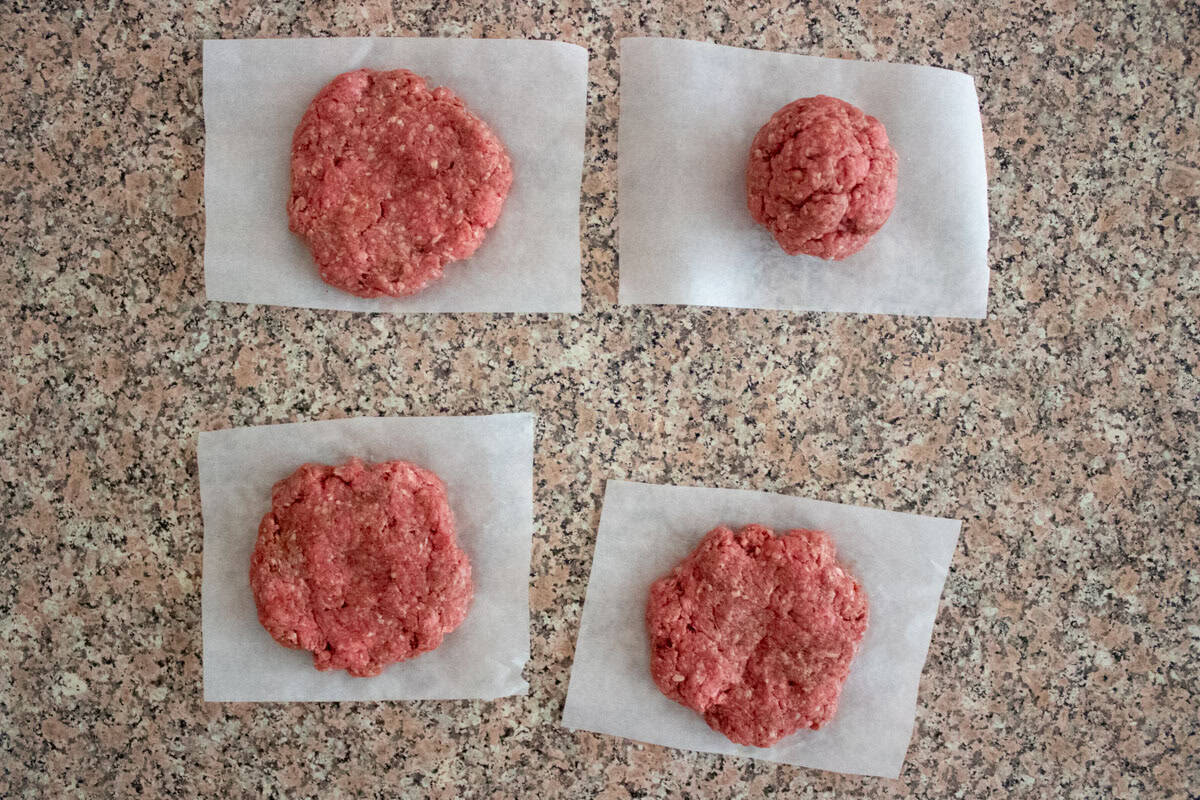
Quart-size freezer bags work well for this because they keep the stack compact. Larger bags are fine too. The goal is to press out as much air as you can without smashing the burger patties flat.
A simple way to do it is to close most of the bag first, then press from both sides toward the center until the extra air is out. After that, seal the rest of the bag.
Frozen patties can go straight into the oven. Add about 5 minutes to the bake time, and keep the same temperature. That turns a little prep work into an easy dinner later, which matters on busy nights.
Toppings that fit real life
While the burgers bake, use that time to get the rest of the meal ready. This is the part that makes the whole dinner feel easy, because your hands are free while the oven handles the meat. You can keep your burger toppings simple or let everyone build their own creation. Use whatever your family already likes and what you already have in the fridge.
A few easy favorites:
- Sliced tomatoes
- Onions
- Avocado
- American cheese
- Pickles
- Lettuce
- Mustard, ketchup, or mayo
Cheese can go on during the last minute or two of baking. The rest of the fixings can wait on the counter while the patties finish.
While the burgers bake is a good time to toast your hamburger buns, slice produce, and clear a spot on the table.
Side Dish Ideas
It's nice to keep it simple for burger nights- some fresh fruit, or fries from the freezer section baked on a second rack of the oven go really well with these. If you have a little more prep time I love making these roasted potatoes and broccoli.
Frequently Asked Questions
While you can technically bake them directly on a sheet pan, using a wire rack is highly recommended. It lifts the burgers out of the dripping fat, ensuring they bake evenly and stay juicy rather than simmering in their own grease.
While 80/20 ground beef is ideal for moisture and flavor, you can use leaner beef if you prefer. Just keep in mind that the result may be slightly less tender, as the extra fat in the 80/20 blend is what helps keep oven-baked patties juicy.
No, flipping is not required when using this method. The hot air in the oven cooks the top and bottom of the patty simultaneously, which helps the burgers hold their shape better since they aren't being handled while cooking.
The most accurate way to ensure safety and quality is by using a meat thermometer. You are looking for an internal temperature of 160 degrees in the thickest part of the patty for a perfectly cooked, safe burger.
More easy kitchen basics and beef dinners
If this kind of low-fuss cooking helps on weeknights, a few other simple recipes are worth keeping close. How to cut rotisserie chicken is handy when you need a fast protein without much prep, and it pairs well with the same busy-night mindset as these burgers.
For other beef dinners, you don't need to overthink it. Sloppy Joe sliders are great when you want something kid-friendly and easy to serve. Italian Crock Pot pepper steak gives you a slower, hands-off option for a fuller dinner. If you have leftovers to use up, roast beef quesadillas turn extra meat into something quick and satisfying.
Enjoy!
I hope you love these oven baked hamburgers and that they fit perfectly into your busy weekly schedule. Be sure to come back and let me know how it went and what you had with it in the ratings and comments.
📖 Recipe
Juicy Oven Baked Hamburgers
Equipment
- 1 mixing bowl
- measuring spoons
- 1 Sheet Pan
- 1 Wire Rack
- aluminum foil optional
Ingredients
- 20 oz Ground Beef 80/20
- 1.5 teaspoon All purpose seasoning
- ¼ teaspoon Salt to taste
- ½ teaspoon Dijon mustard
- ½ teaspoon Worcestershire sauce
- 4 slices Cheese optional
- 4 ea Hamburger buns and toppings as desired
Instructions
- Preheat the oven to 400°F. Line a rimmed baking sheet with foil, then place a wire rack on top.
- Add the ground beef, all-purpose seasoning, salt, Dijon mustard, and Worcestershire sauce to a large bowl. Mix gently, just until combined.20 oz Ground Beef, 1.5 tsp All purpose seasoning, ¼ tsp Salt, ½ tsp Dijon mustard, ½ tsp Worcestershire sauce
- Divide the mixture into 4 equal portions. Shape each portion into a patty slightly wider than the hamburger buns. Press a small indent into the center of each patty with your fingers. Place patties on the wire rack.
- Bake for 15 to 20 minutes, or until the center of each burger reaches 160°F on an instant-read thermometer. Do not flip.
- If using cheese, add a slice to each burger during the last 1 to 2 minutes of baking.4 slices Cheese
- Serve on buns with your favorite toppings.4 ea Hamburger buns
Podcast or Video
Notes
- Avoid overmixing: Mix the beef only until the seasonings are evenly spread through the meat. Overmixing can make burgers firm.
- Air fryer or convection oven: Cook fresh patties at 375°F for about 12 minutes. Frozen patties usually take 16 to 17 minutes. Check the internal temperature before serving.
- Frozen patties: Bake frozen homemade or store-bought patties at 400°F for 20 to 25 minutes. Check that they reach 160°F.
- No wire rack? You can bake patties directly on a foil-lined sheet pan, but a rack helps excess grease drain away.
- Freeze ahead: Place parchment paper between uncooked patties, store in a freezer bag, and freeze. Defrost in refrigerator overnight or bake from frozen for 5 minutes longer.
- Seasoning note: If your all-purpose seasoning contains plenty of salt, you can leave out the extra ¼ teaspoon salt.
Nutrition
Nutrition information is provided as a courtesy and is an estimate. It is recommended to use your preferred calculator with the actual ingredients you use for optimal accuracy.

Anne Aslanides says
My family loves these- perfect for days firing up the grill is too much work!